Conclusions often don’t get the time they deserve. Typically, they are dashed off with little thought, and therefore are full of clichés, bulky, bureaucratic phrases and missing information.
There are three things to keep in mind when crafting your conclusion. First, keep it short – about 2-3 sentences. Also, keep it focused, so don’t introduce any new topics. And third, ensure that you have summed up the main message of the letter and have provided the necessary contact information and specific time lines.
These ideas create a formula that you can follow for all your letters. Once you get the hang of it, it will become a habit.
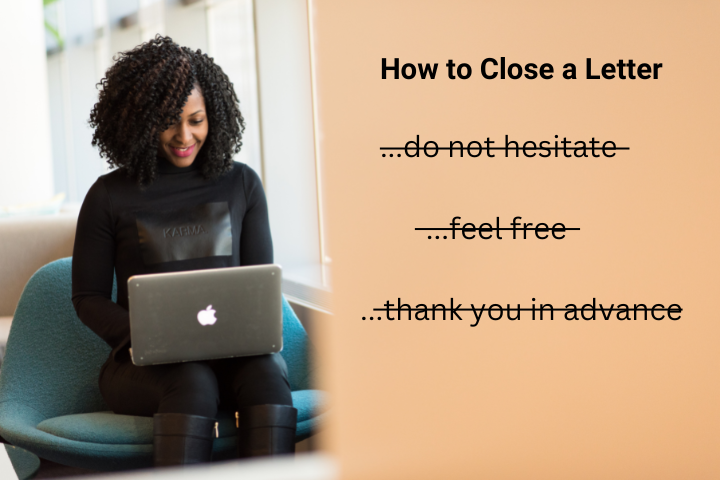
Here are some typical bulk phrases and clichés to avoid:
- do not hesitate (Can you imagine your reader hesitating? No!)
- feel free (How does someone feel like this? Hmmm…strange.)
- thank you in advance (Careful! Many people find this condescending and rude.)
- in this matter (Matter? What matter? Be specific. Say what it actually is!)
- the undersigned (Use a specific name or pronoun!)
- as soon as possible or at your earliest convenience (These phrases say to the reader – put this request at the bottom of your to-do list.)
The example below shows a well-written closing:
I’m looking forward to hearing your opinions on our proposal. Since the start date for the project is March 15, please call me at 123-4567 before February 28 so we can discuss it.
And here’s the same example showing what you want to avoid writing!
I’m looking forward to hearing from you about your opinions on this matter. Since the start date for the project is March, I thank you in advance for calling me at the number above as soon as possible so we can discuss this matter. Please feel free to contact the undersigned with any questions.
Yuck!