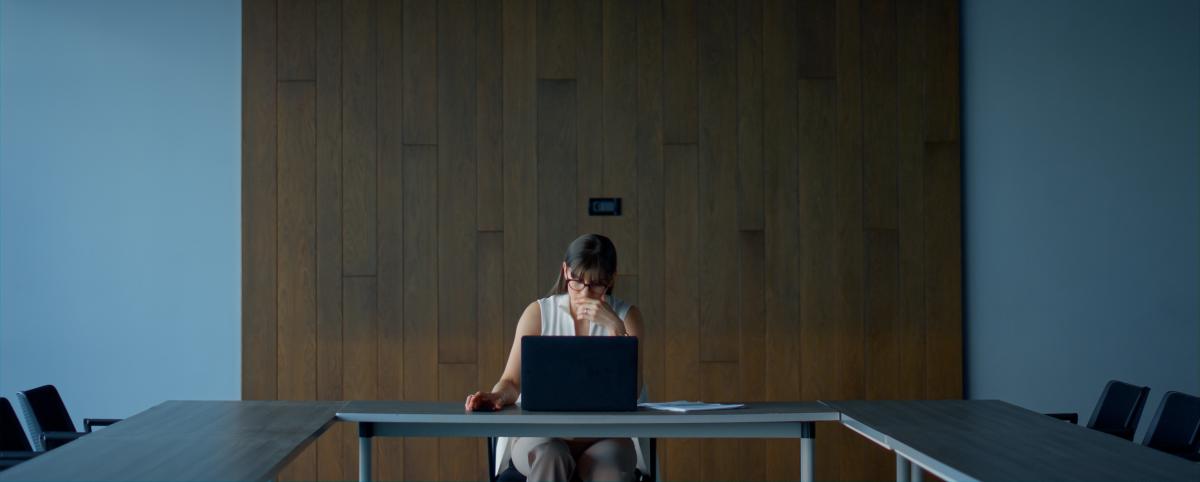
I used to learn the most important things before the workshop even started.
Someone would mention, almost in passing, that their team had just gone through a restructure. Someone else would say they had been asked to deliver news they did not believe in. Another person was managing for the first time and had not told anyone they were terrified. None of that was on the registration form. All of it changed how I taught that day.
Those conversations happened in the ten minutes before we began, at the coffee table, in the hallway, in the small unscheduled space where people are just people before they become participants. Then, slowly, they stopped. The breaks that used to hum with conversation went quiet. People reached for their phones instead, drawn into a world in their pocket that was easier to enter than the one in the room.
Nobody decided to stop connecting. We just stopped leaving room for it.
The space before the work
I have been thinking about what we lost when that happened. It was not only the warmth of it, though that mattered. It was the information, the context, and the thing someone almost did not mention that turned out to be the whole point.
Those conversations were not a preamble to the work. They were part of the work.
They helped people make sense of what they were carrying before the agenda began. They helped me understand the room. They helped participants see that they were not the only ones struggling with something. That kind of connection does not always look productive from the outside, but it changes what becomes possible once the work begins.
What disappears when connection disappears
We have become very good at moving through the day efficiently. We book the meeting, open the file, share the link, get through the agenda, and move on. Everything is scheduled, measured, and accounted for. The in-between spaces are the easiest to cut because they do not look essential.
But those spaces are often where trust begins.
I think of a participant in a workshop recently who told the group, quietly and carefully, that she had stopped sharing her thoughts and feelings at work. She said she used to, but somewhere along the way she learned it was not worth it. That morning was the first time she had opened up in almost three years.
Then she got emotional. And so did the rest of us.
Three years in the same organization. Three years attending meetings, sending emails, completing work, and carrying something alone because the space for it had quietly closed over. She is not the exception. She is what it looks like when a workplace loses its capacity for genuine connection, one filled-in break and one skipped check-in at a time.
The silo problem is a human problem
In too many organizations, people are working beside each other without really working together. Everyone knows their lane, and nobody knows much about the lane next to them. The new employee does not know who to ask for help. The manager knows the performance indicators but not what anyone is worried about. The person with the insight that could change the conversation stays quiet because they have learned that speaking up does not go anywhere.
We often call this siloing and treat it like an organizational design problem. Sometimes it is. But it is also a human problem. People work in silos because they do not know each other well enough to trust each other, and they do not know each other because the conditions for that trust have been designed out of the workday.
The good news is that what we have designed out, we can design back in.
Three places to start
Build in time before the work begins
If you are gathering people in person or virtually protect a few minutes at the start where nothing is scheduled. No agenda item, no formal icebreaker, no rushed transition into the work. Let people arrive. Let them talk. Let them become a room before you ask them to become a team.
Make check-ins real
A check-in is not a status update. It is a genuine question about how someone is doing, asked by someone who actually wants to know the answer. The difference between a performative check-in and a real one is presence. People can feel whether you are listening or simply waiting for the meeting to move on.
Ask one question you do not know the answer to
In your next meeting, with your next client, or in your next workshop, ask something you are genuinely curious about. What is actually making this hard for you? What have we not talked about yet? What do you wish people understood? Then wait. Let the real answer come.
The case for slowing down
We do our best work together, not simply side by side, but actually together, present with each other, curious about each other, and willing to let the conversation go somewhere unplanned. That is where the unexpected ideas come from. That is where people feel safe enough to say the thing that needs to be said. That is where the work becomes more than the sum of its tasks.
We have made it easy to be efficient and hard to be present. The way back is not complicated. It is a choice to leave a little room, ask a real question, and stay in the conversation long enough to hear what someone is actually saying.
Pull up a chair. Let’s talk.